PORTFOLIO
I have experience leading research teams, leveraging research insights to inform strategy, uncovering the customer needs behind customer behavior, and using Jobs To Be Done to drive product direction and design prioritization.
Below are a few high-level samples from my portfolio. If you would like to learn more, please contact me.

Designing and Building an AI-Native Memoir Platform from 0 to 1
My role: As a Co-Founder of Tayle, I lead product strategy, UX design, and technical development for an AI-native memoir platform that transforms how people capture, structure, and share their stories and memories. I own the full lifecycle: user research and validation, high-fidelity design in Figma, and full-stack development using an AI-assisted engineering methodology.
Methods: Competitive analysis, user interviews, rapid prototyping, beta testing, Jobs to Be Done (JTBD) template design, design system development, AI-assisted development (vibe coding), and automated quality assurance.
Highlights: Designed and deployed a multi-modal "AI Interviewer" that orchestrates voice AI (Vapi), large language models (Anthropic, Gemini), and real-time media processing to turn spoken memories into structured narratives and synchronized video montages. Built a scalable design system in Figma and implemented it in React and TypeScript with a custom component registry that enables rapid UI iteration while maintaining visual consistency. Developed a rigorous AI-assisted engineering methodology using custom agent rules and automated audit protocols, enabling a solo founder to maintain production-grade code quality, security hardening (Row-Level Security, IDOR prevention), and end-to-end testing (Playwright) at startup speed.
Impact: Currently in private beta with active users capturing and sharing life stories. The AI-assisted development methodology I established has become a transferable framework that I now share through my consultancy and content, demonstrating how research-trained professionals can leverage vibe coding to go from insight to production without a traditional engineering team.

Building the Research Foundation for a Unified Digital Platform
My role: As a UX Research Consultant for Simpson Strong-Tie (via a.team), I led the generative research effort for the 0-to-1 development of a platform that would unify all of Simpson's digital tools under a shared user experience and technical infrastructure. I served as a strategic partner to Senior Product Leadership, helping define the long-term product vision and multi-year product roadmap.
Methods: Generative user research, including, stakeholder interviews, Jobs to Be Done (JTBD) studies, persona development, journey mapping, and CSAT/NPS program design.
Highlights: Partnering directly with senior product leadership to translate research findings into a multi-year product roadmap, bridging the gap between fragmented digital tools and a cohesive platform strategy. Designed the roadmap as a visual artifact in Figma to serve as a living reference for cross-functional alignment.
Impact: Research outputs became the foundation for the platform's product strategy and go-to-market priorities, giving the organization a customer-validated framework for deciding which tools to unify first and how to sequence the rollout.
Implementing Jobs To Be Done into the Product Development Process
My role: As the Senior Manager of UX Research at Smartsheet, I led an initiative using Jobs To Be Done (JTBD) to center the product design and development process around customer problems.
Methods: Review of past research findings, literature review, stakeholder workshops and interviews, and journey mapping.
Highlights: Creating a JTBD ‘guild’ with three other UX researchers to educate and evangelize JTBD in the Product org and establish oversight and governance of the Jobs To Be Done process.
Impact: JTBD is now a Product org-wide initiative and the standard way to align on what problems a product is solving. It is used to help the design team prioritize their work and tell the story of what their designs are accomplishing.

(Re)building and scaling a UX research team
My role: As a Manager of UX Research at Smartsheet, I stepped into a leadership vacuum to stabilize and scale the research organization during a period of significant organizational change.
Highlights: Redesigned team operations, including standups, ceremonies, and process documentation. Scaled the team by 10 researchers to meet increasing product coverage demands while maintaining culture and retention.
Impact: Transformed an understaffed team with undefined processes into a fully operational research org with clear product coverage, increased efficiency, and stakeholder transparency via a research repository and project tracking systems.
Using mixed-method generative research to improve comment usage by 168%
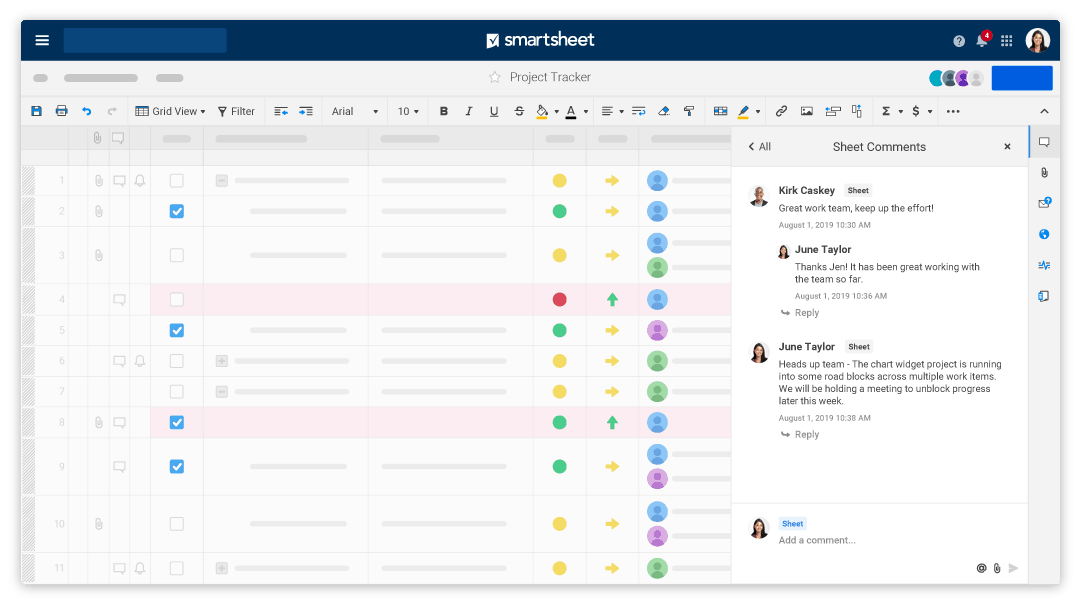
My role: As a Senior UX Researcher at Smartsheet, I worked with designers and product managers to improve the comments feature with new conversational capabilities.
Methods: Competitive analysis, literature review, BI analysis, internal team interviews and surveys, user survey, design mapping workshop, concept testing, usability testing, and customer feedback analysis.
Highlights: Watching the feature launch as part of the keynote presentation at the 2019 Smartsheet ENGAGE conference.
Impact: My research led to a product rebranding from Comments to Conversations, developed tenets that laid the groundwork to guide the development of further conversational capabilities, uncovered customer needs and product workarounds that have led to multiple new features beyond the scope of this project, and led to a 168% growth in comment usage.
End-to-end mapping of the transit rider journey
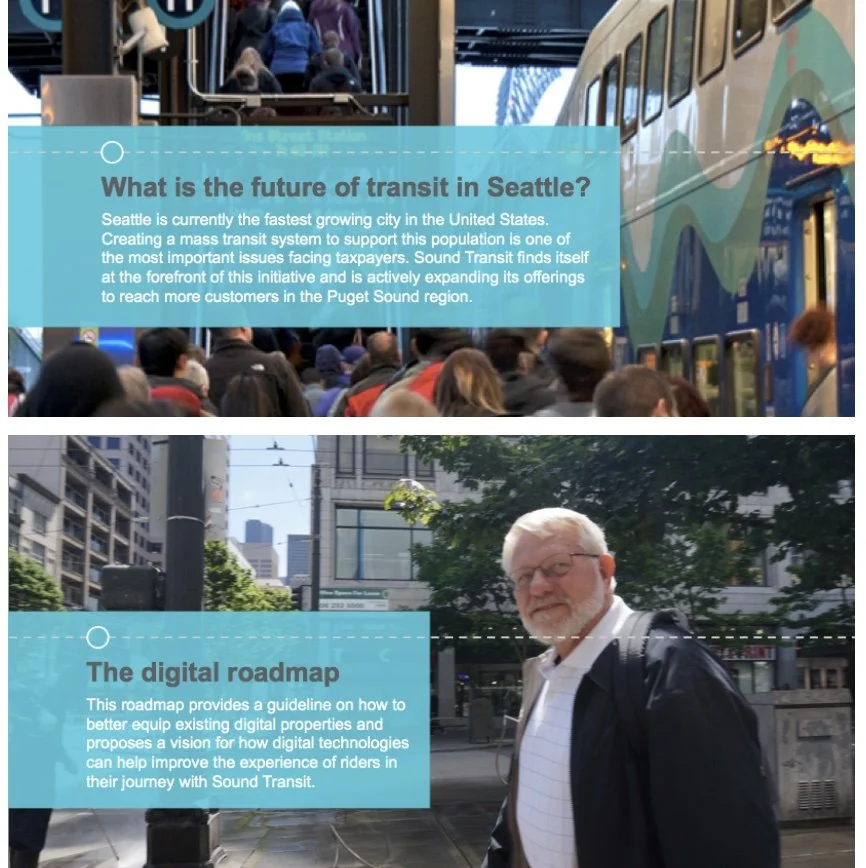
My role: As a UX Researcher at Anthro-Tech, I performed multiple studies to develop a vision for Sound Transit’s presence across all digital channels.
Methods: Review of past research findings, comparative review, diary study, shadowing study, usability testing, technology capabilities review, stakeholder surveys and interviews, customer surveys and interviews, and journey mapping workshops.
Highlights: Produced a printed booklet that detailed recommendations for their 3-year digital roadmap. Presented to Sound Transit and King County Metro on recommendations for digital bus arrival signage.
Impact: Roadmap recommendations were adopted by Sound Transit for their 3-year digital strategy. I was also asked to present to King County Metro. My findings directly informed changes to digital bus arrival signage, and signage in general, across the Seattle public transit system.
Improving wayfinding and evaluating kiosk effectiveness
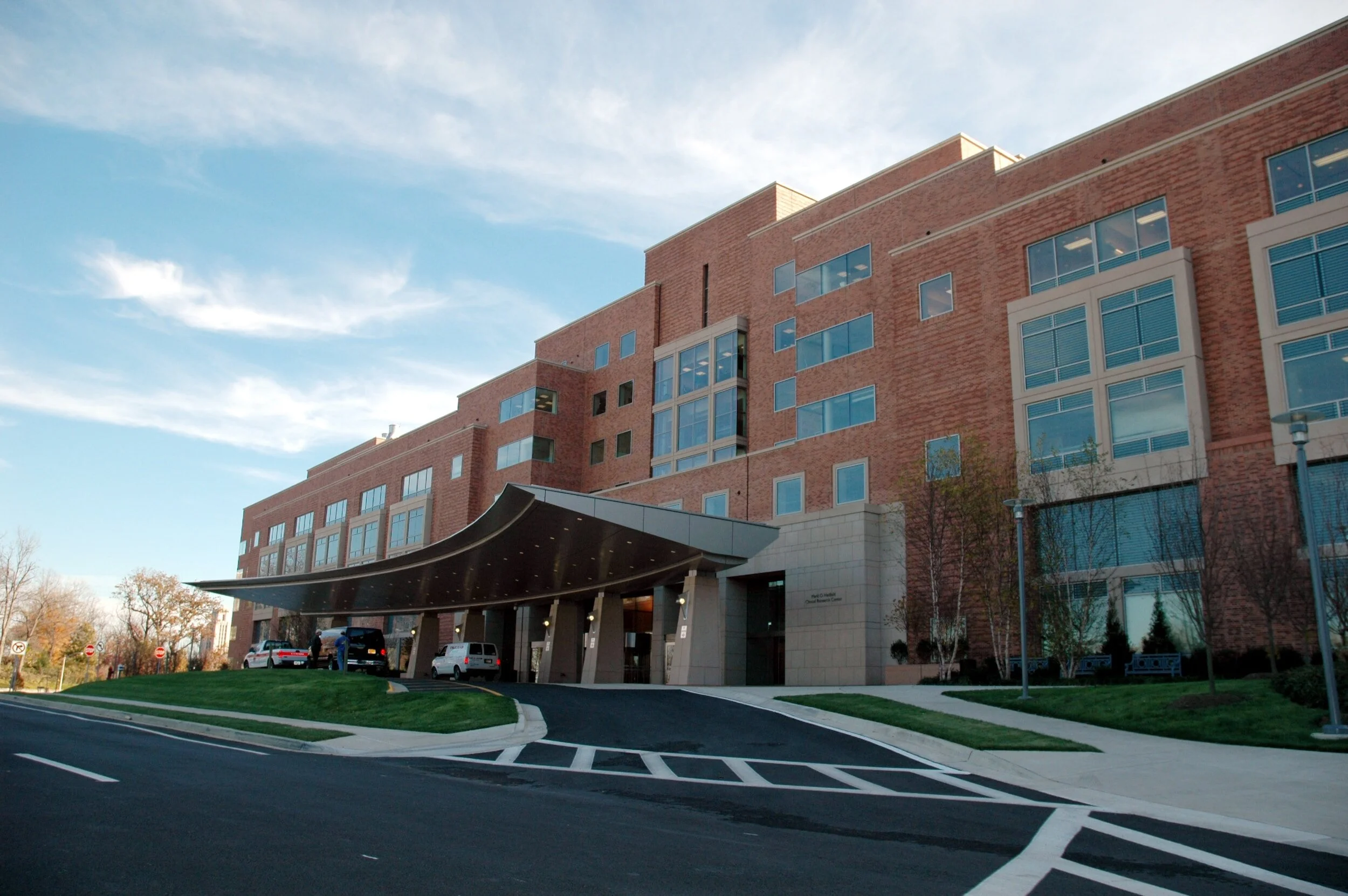
My role: As a UX Researcher at Anthro-Tech, I worked with an architecture firm to design improved hospital wayfinding signage and evaluate the effectiveness of a kiosk installation.
Methods: Customer surveys and interviews, shadowing studies, fly-on-the-wall observations, and usability studies.
Highlights: Created a set of guidelines for effective wayfinding signage.
Impact: Ultimate recommendation was to NOT install a kiosk in the hospital due to the lack of observed effectiveness versus cost to install and maintain.